Hardwood vs Softwood — the difference everyone gets wrong
It is not about how hard the wood feels. It is about the tree. Here is what really separates hardwood from softwood — and which to choose for a home in Jordan.
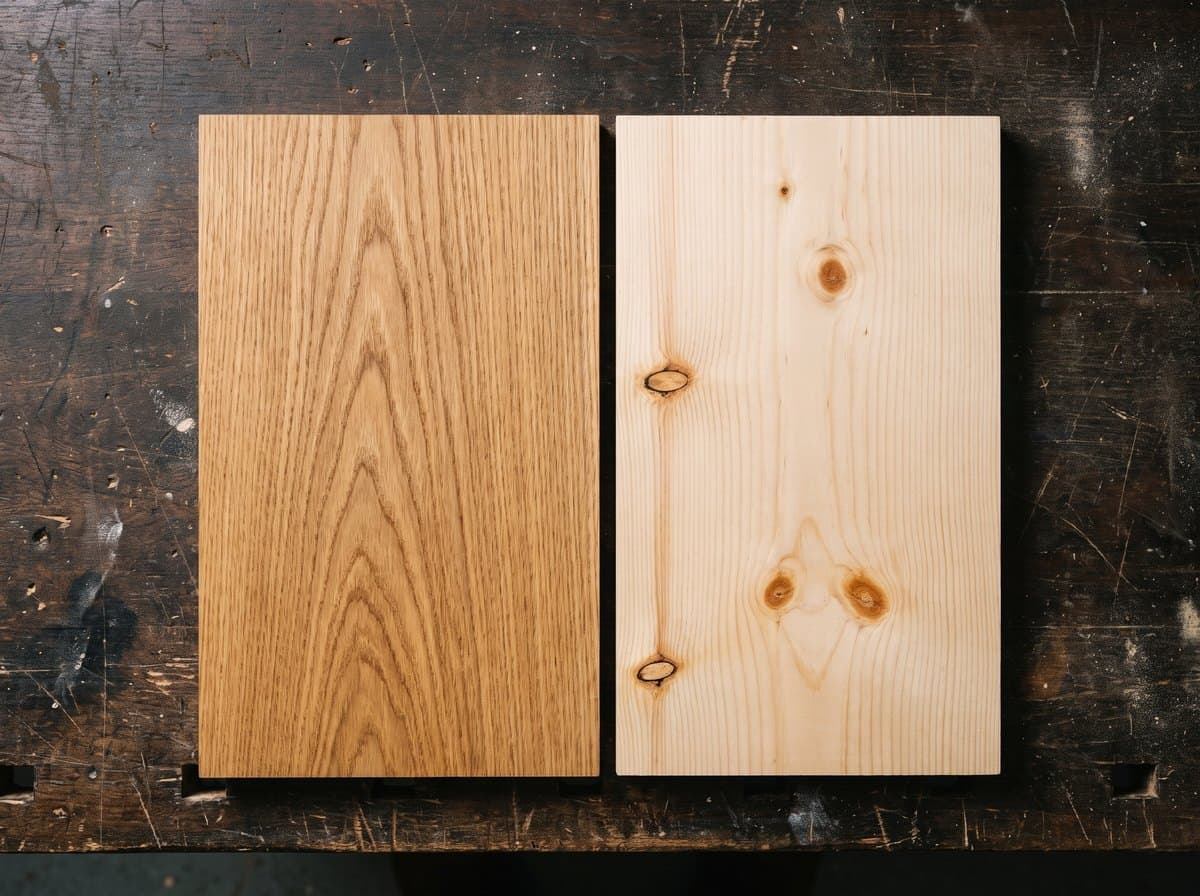
It is about the tree, not the hardness
The names mislead almost everyone. "Hardwood" and "softwood" do not describe how hard the wood is — they describe the tree it came from. Hardwoods come from broadleaf trees that drop their leaves (oak, walnut, beech, ash). Softwoods come from conifers — evergreens with needles and cones (pine, spruce, cedar). It is a botanical label, not a hardness test.
The exception that proves it
Balsa wood — the lightest, softest wood you can buy, the one used in model planes — is technically a hardwood. Yew, hard and springy enough that medieval bows were carved from it, is a softwood. So the label tells you the botany, not the strength. That is exactly why a real wood library lists the actual numbers instead.
What actually matters for your furniture
Four properties decide how a wood behaves: density (heavier usually means tougher and longer-lasting), Janka hardness (resistance to dents and scratches), dimensional stability (how much it swells and shrinks with humidity), and grain (its look and how it works under a tool). When someone tells you a wood is "good", ask which of these they mean — they rarely point the same way.
Which should you choose in Jordan?
For furniture meant to last generations and take daily wear — dining tables, chairs, floors — choose a hardwood like oak, walnut or beech. For lighter, cheaper, paint-grade work, or anything outdoors, a softwood like pine or naturally weather-resistant cedar makes sense. One local truth: Jordan's dry summers and sharp humidity swings make solid wood move. A good maker acclimatises the timber and designs the joinery to let it breathe — which is half of why solid-wood furniture either lasts or cracks.
See every wood in the library
Browse the woods