The finish is not the shine — from sandpaper to the final coat
Oil, sealer, lacquer, varnish, wax — everyone sells you a shine, few explain what actually protects the wood. Here is the honest hierarchy of surface treatment, from the first grit of sandpaper to the last coat, and what makes sense in Jordan.
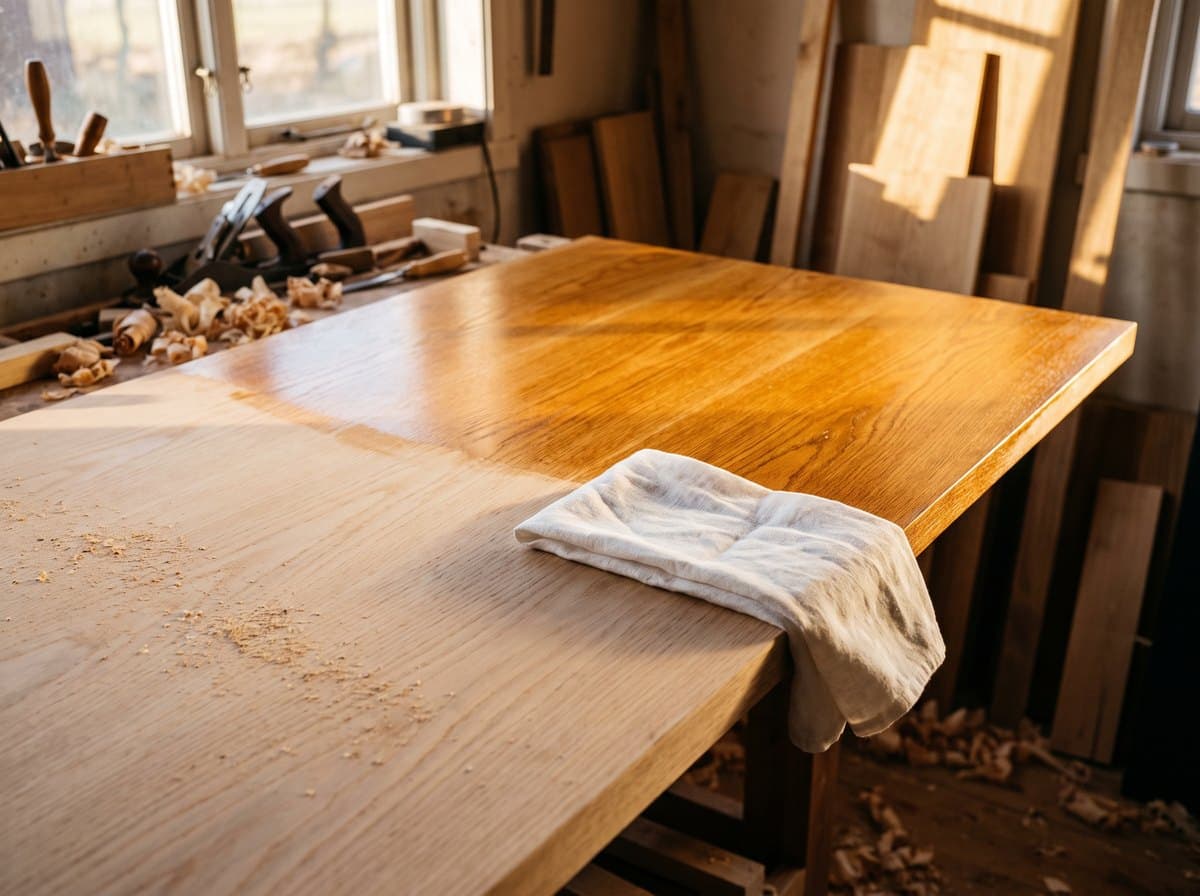
The finish starts with sandpaper, not with a can
Whatever you put on the wood at the end, the surface underneath decides how it looks. Sanding is not "cleaning the wood" — it is cutting millions of tiny scratches into it, each grit replacing the deeper scratches of the one before with finer ones. A typical ladder for furniture is 80 → 120 → 180 → 220. The rule of thumb: never jump to a grit more than about fifty percent higher than the last one. Jump from 80 straight to 220 and the fine paper only polishes the tops of the deep 80-grit valleys — it never reaches their bottoms.
Those leftover valleys are invisible on raw wood. Then the finish goes on, the surface turns slightly glossy and transparent, and every one of them lights up — especially if you use a stain (صبغة), which pools dark in the deep scratches. Half of all "the lacquer came out ugly" complaints are really sanding complaints. The finish did not fail; it simply told the truth about the surface under it.
Two practical habits: sand with the grain for the final passes, because cross-grain scratches show ten times more; and before any water-based product, wipe the wood with a damp cloth, let it dry, and sand the raised fuzz off with the last grit. Skip that and your smooth surface turns to sandpaper the moment the first coat hits it.
What a finish actually does — and what it doesn't
Strip away the marketing and a wood finish has three honest jobs: slow down moisture, so the wood does not swell, shrink and crack with every season; keep dirt, skin oils and spills out of the pores; and take the daily wear — cups, keys, elbows — so the wood itself does not have to. Everything else, including the shine, is appearance.
This is the most important sentence in this article: shine is not protection. A thick glossy coat can be a weak finish over bad preparation, and a dead-matte oiled surface can be deeply protected. The two questions that actually matter are: does this product go into the wood or sit on top of it, and how hard is the cured material? Those two answers predict almost everything — durability, feel, and how repairs work years later.
And one more honest line: no finish is maintenance-free. Films eventually scratch and wear through; oils slowly dry out and want a refresh. Anyone who promises you a "lifetime, never touch it again" surface on a dining table is selling, not explaining.
Finishes that go into the wood — the oils
Penetrating oils soak into the top fibres and harden there, so you touch wood, not a coating. Linseed oil (زيت بذر الكتان) is the ancient one — cheap, forgiving, gives a warm amber glow, but it cures slowly and keeps ambering for years. Tung oil cures harder and more water-resistant than linseed and yellows less, at a higher price and with several patient coats. "Danish oil" is not one thing — it is any blend of oil and a little varnish, made so amateurs get a decent result fast: easier than pure oil, slightly more protective, still repairable.
The modern evolution of this family is hardwax oil — oil to penetrate, wax and harder resins to resist at the surface. It has become our default for tabletops in the workshop; it deserves its own article, so here I will only say: if you love the feel of real wood but need real protection, that is the family to look at.
What oils give you: the deepest, most natural look and feel, no plastic film, and the killer feature — spot repair. A scratch or a water mark is fifteen minutes with fine sandpaper and a rag of fresh oil, and the repair disappears. What they cost you: less resistance to standing water, alcohol and heat than a good film, and a re-oil every year or two on hard-working surfaces. One warning that belongs in bold: rags soaked in linseed-type oils can self-ignite as they cure. Spread them flat to dry or soak them in water — never leave them balled up in a bin.
Finishes that sit on the wood — sealer, lacquer, varnish
Film finishes build a protective layer on top of the wood. In workshops across Jordan and the Levant, the standard system has a rhythm every carpenter knows: sealer then topcoat (سيلر ثم لكر). The sealer is a fast-drying first coat that soaks in, locks the surface, and sands to powder in minutes; the lacquer builds the actual protective film over it. One sealer coat, a light sanding, then the topcoats — that order exists for a reason, and piling on extra sealer coats actually weakens the bond of what goes above.
The classic topcoat here is NC (nitrocellulose) lacquer — the finish of most local furniture. Its virtues are speed and beauty: it sprays fast, dries in minutes, and each new coat melts into the last, which also makes it surprisingly repairable. Its honest weaknesses: it stays relatively soft, dislikes heat and alcohol, and yellows with age. Polyurethane varnish (PU) is the tougher brother — it cures into a hard, chemical- and water-resistant film, which is why it rules kitchens and floors. The trade: once cured it is plastic, and damage cannot be melted back in. Water-based PU is the newer option — almost water-clear, low-smell, non-yellowing — perfect when you want pale woods to stay pale.
Two old-timers complete the family. Shellac — a natural resin dissolved in alcohol — is a beautiful, fast, food-safe finish and the best "fix-it" sealer in the trade, but a spilled drink can mark it, so today it plays supporting roles. And wax: understand this clearly — wax is a polish, not a protection. It adds sheen and silkiness over another finish and does almost nothing on its own. A "wax finish" on a dining table is a promise of stains.
Sheen and repairs — living with the piece
Sheen — matte, satin, gloss — is a separate choice from the finish family, and it changes daily life more than people expect. The glossier the surface, the more mirror-like it is, and mirrors show everything: dust, fingerprints, micro-scratches, and every flaw in the preparation underneath. Matte and satin surfaces scatter light and quietly hide the same wear. That is why full gloss — the polyester piano look (بوليستر) — is the most expensive finish to do honestly: it demands flawless, filled, glass-flat preparation, because it will expose anything less. On a family dining table, satin or matte is almost always the kinder choice.
Then there is the question nobody asks in the showroom and everybody asks three years later: what happens when it gets damaged? Here the hierarchy is clear. Oiled surfaces are spot-repairable — sand the scratch, re-oil, done, invisibly. NC lacquer is workshop-repairable — new lacquer melts into old, so a sprayed repair can blend. Cured polyurethane is the hardest case: nothing melts into it, so a real repair usually means sanding the whole top back to bare wood and refinishing it. None of this makes one finish "best" — but you should know, before you choose, whether year five means a rag of oil at home or a trip back to the workshop.
Finishing in Jordan — sun, dust, dry air, and the olive-oil myth
Our climate rewrites some of the rules. Jordan's sun is fierce, and UV does two things at once: it bleaches or shifts the wood's own colour, and it yellows oil-based films — linseed oil and oil-based PU amber noticeably with the years, while water-based PU stays clear. For a pale oak piece near a sunny window, that difference is visible within a couple of summers. The dry air is a mixed blessing: coats dry fast, but solvent finishes can dry too fast in a hot afternoon and trap blush or brush marks — and the same dryness works the wood itself, so a flexible, well-maintained finish matters more here, not less.
Dust is the finisher's real enemy in Amman. A freshly sprayed glossy coat is flypaper for the fine dust that hangs in our air, and every settled speck becomes a bump you can see in the reflection. This is a practical argument for satin and matte sheens, and for finishes that are wiped or rubbed rather than sprayed when there is no clean spray room.
Two local myths to retire. First: "just wipe the cutting board with olive oil." Olive oil never dries — it is not a drying oil — so it sits in the pores and slowly goes rancid. Use a drying oil or plain mineral oil (زيت البرافين from any pharmacy) instead. Second: "you can't put food on varnished wood." In truth, once any reputable finish has fully cured — oil, shellac, lacquer, PU — the cured material is inert and food-contact is fine. The danger was in the wet solvents, and they are long gone. What actually matters for kitchen boards is the knife: you want a finish that lives in the wood, not a film the blade will chip into your salad.
An engineer's note — my honest hierarchy
After years of finishing furniture, here is how I actually decide, in one breath. First I buy sandpaper, not finish — eighty percent of a beautiful surface is preparation, and no product in any can will rescue a rushed 120-grit surface. Then I ask two questions: how hard will this piece work, and who will live with it?
For pieces you touch and love — dining tables, desks, anything in solid oak or walnut — I reach for hardwax oil or a good oil system: the wood stays wood under your hand, it ages instead of wearing out, and the owner can heal it at home with a rag. For kitchens, bathrooms and rental-property furniture that must survive neglect, a PU film earns its plastic feel — water-based if the wood is pale or the piece lives in the sun. For painted MDF work and fast commercial jobs, the local sealer-and-lacquer system remains unbeatable for speed and cost, and I say so without snobbery — it is a good system when it is done patiently.
What I will not do is sell shine as quality. A thick glossy coat over two grits of lazy sanding is the most common finish in the market, and it is the worst of every world — it shows every flaw, protects briefly, and cannot be repaired gracefully. The honest hierarchy is simple: preparation first, protection second, sheen last. Choose in that order and almost any finish family will serve you well; choose in reverse and no finish can save the piece.
See every wood in the library
Browse the woods